
-
fortigo.secure@gmail.com
Send Email
-
+91 7204951122
Whatsapp
+91 7204951122
Contact Us
+91 7204951122
Contact Us
Blog Details
Jan
Importance of Professional Housekeeping for a Healthy Workplace
In today’s fast-changing work environment, workplace safety is a top priority for businesses in all industries. Offices, IT parks, factories, hospitals, schools, and commercial buildings face many security challenges. These include unauthorized access, theft, workplace violence, and emergencies. To tackle these risks, many organizations depend on professional security guards as a key part of their safety plan.
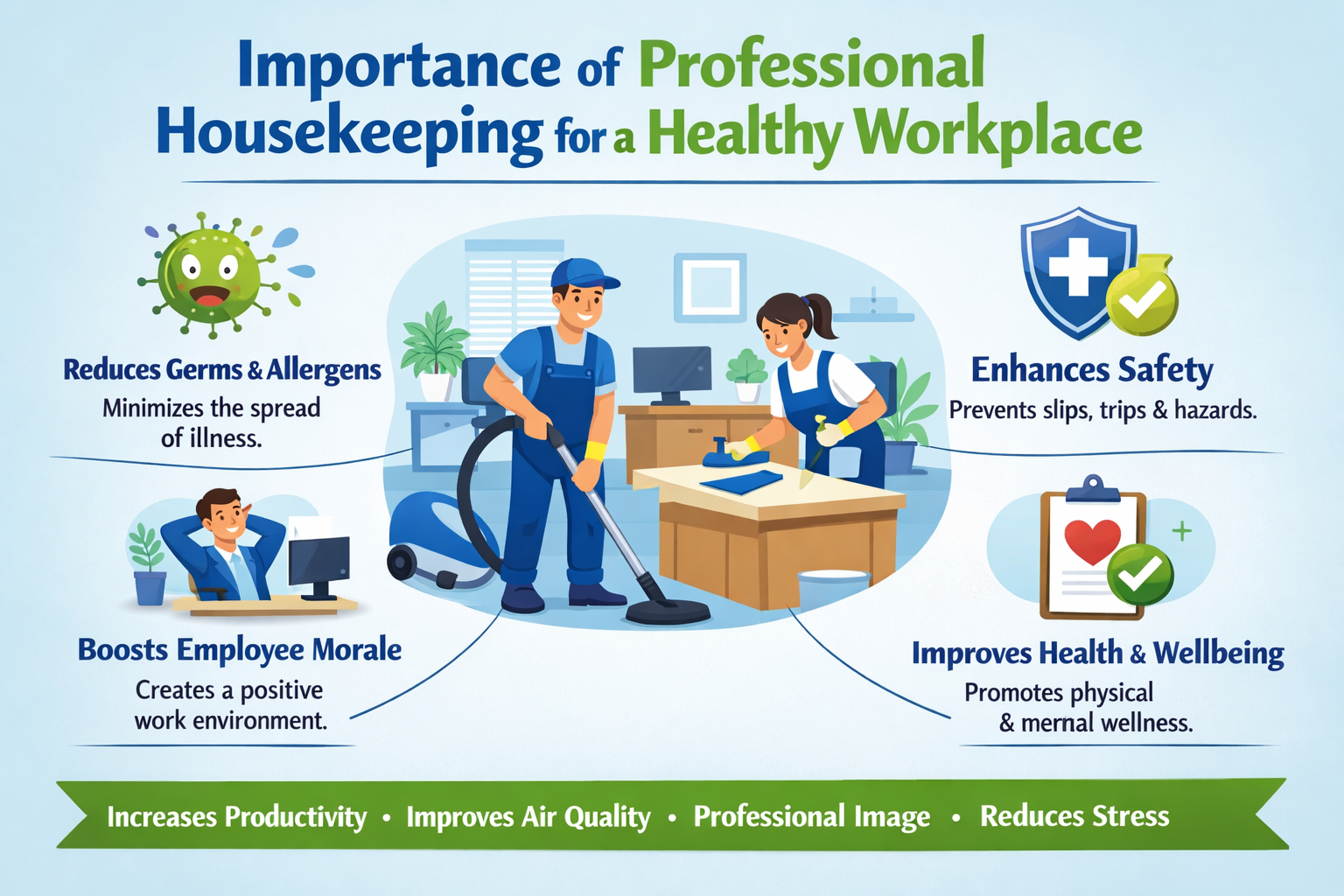
A clean, hygienic, and tidy workplace is essential. Professional housekeeping services do more than basic cleaning. They impact employee health, safety, morale, productivity, and even business continuity. In settings like corporate offices, IT parks, hospitals, schools, malls, and industrial sites, professional housekeeping plays a key role in creating environments where people can work safely and effectively.
This blog examines the importance of professional housekeeping for a healthy workplace. It discusses the benefits, best practices, and reasons why organizations should invest in expert housekeeping services.
Understanding Professional Housekeeping
Professional housekeeping includes organized, trained, and well-managed cleaning and maintenance services. Skilled workers use the appropriate tools, equipment, chemicals, and methods. Unlike casual or one-time cleaning, professional housekeeping follows clear protocols, safety guidelines, and hygiene standards.
Professional housekeeping services typically include:
-
Daily office cleaning and sanitation
- Floor care (mopping, polishing, carpet cleaning)
- Restroom cleaning and hygiene management
- Waste management and disposal
- Pantry and cafeteria cleaning
- Deep cleaning and periodic sanitation
- Disinfection and infection control
- Maintenance of common areas and workstations
By hiring professionals for housekeeping, organizations guarantee consistent quality and compliance that untrained or in-house staff often cannot provide.
The Link Between Workplace Cleanliness and Employee Health
Reduced Spread of Illness
One of the main reasons for proper housekeeping is to prevent disease. Offices and workplaces are shared spaces where employees touch common surfaces such as desks, keyboards, door handles, elevator buttons, washrooms, and pantry areas. If these surfaces are not cleaned and disinfected well, they can become hotspots for bacteria and viruses.
Professional housekeeping services use approved disinfectants, clean regularly, and focus on sanitation to help cut down on the spread of infections. This significantly reduces the chances of seasonal illnesses like the flu, viral infections, and other contagious diseases.
Lower Absenteeism
Poor hygiene in the workplace often leads to more employees missing work. When employees get sick often, productivity decreases, deadlines are missed, and operational costs increase.
A clean workplace results in:
- Fewer sick days
- Healthier employees
- Improved attendance
- Better team performance
By spending on professional cleaning, organizations can also save money on medical leave, insurance claims, and lost productivity.
Enhancing Employee Productivity and Morale
Clean Environment Boosts Focus
A messy and dirty workplace can be distracting and stressful. Dust, unpleasant smells, overflowing trash bins, and dirty restrooms make it hard for employees to focus on their tasks.
Professional housekeeping provides:
- Clean desks and workstations
- Organized common areas
- Fresh indoor air
- Pleasant working conditions
When employees work in a clean environment, they feel more comfortable, focused, and motivated.
Psychological Impact of Cleanliness
Cleanliness has a strong psychological effect. Employees often link a clean workplace to
- Care and respect from management
- Organizational discipline
When management puts money into professional cleaning, employees feel valued. This boosts morale, increases job satisfaction, and strengthens loyalty to the organization.
Workplace Safety and Risk Reduction
Preventing Accidents and Injuries
Slippery floors, cluttered corridors, unmanaged waste, and poorly maintained facilities raise the chances of workplace accidents. Slips, trips, and falls are some of the most common workplace injuries.
Professional housekeeping helps prevent these incidents by:
- Keeping floors clean and dry
- Clearing obstacles from walkways
- Managing spills and waste properly
- Maintaining staircases, entrances, and exits
A safe workplace lowers compensation claims, legal risks, and operational disruptions.
Compliance with Safety Regulations
Many industries are governed by strict safety and hygiene regulations. Professional housekeeping services help organizations comply with:
- Occupational health and safety standards
- Industry-specific hygiene norms
- Fire safety and emergency preparedness
Following these regulations not only avoids penalties but also builds the organization’s reputation as a responsible employer.
Importance of Professional Housekeeping in Different Work Environments
Corporate Offices and IT Parks
Importance of Professional Housekeeping in Different Work Environments Corporate Offices and IT Parks In corporate offices, cleanliness directly affects productivity, employee satisfaction, and brand image. Professional housekeeping ensures:
- Clean workstations and meeting rooms
- Hygienic restrooms and pantry areas
- Well-maintained reception and common spaces
A clean office also creates a positive impression on clients, partners, and visitors.
Healthcare Facilities
Hospitals, clinics, and diagnostic centres require the highest level of cleanliness. Professional housekeeping in healthcare settings focuses on:
- Infection control
- Bio-medical waste management
- sterilization of critical areas
Proper housekeeping is essential for patient safety, staff protection, and meeting regulations.
Educational Institutions
Schools, colleges, and universities have large populations of students and staff:
- Maintain clean classrooms and labs,
- Reduce illness among students
- create a safe learning environment
A clean educational facility supports better attendance and academic performance.
Industrial and Manufacturing Units
In industrial settings, housekeeping is closely related to safety and efficiency. Good housekeeping leads to:
- Clean production areas
- Proper waste segregation
- Less risk of fire and accidents
Effective housekeeping practices improve workflow, extend equipment life, and enhance employee safety.
Role of Housekeeping in Infection Control and Hygiene Management
Post-Pandemic Workplace Expectations
Role of Housekeeping in Infection Control and Hygiene Management Post-Pandemic Workplace Expectations The COVID-19 pandemic has changed how organizations view cleanliness and hygiene. Employees now expect:
- Regular sanitization
- Clean washrooms and common areas
- Visible hygiene practices
Professional housekeeping providers are trained to follow infection control protocols, which include:
- Surface disinfection
- Fogging and deep cleaning
- Touchpoint sanitization
These practices help reassure employees and visitors that the workplace is safe.
Professional Housekeeping and Brand Image
First Impressions Matter
A workplace often reflects the values of an organization. Visitors, clients, and stakeholders form opinions based on
- The cleanliness of reception areas
- The condition of washrooms, and overall maintenance
- Overall maintenance
Professional housekeeping ensures that your workplace consistently presents a positive and professional image.
Trust and Credibility
Clean and well-maintained facility communicates
- Attention to detail
- Commitment to quality, and respect for people.
This builds trust with clients, employees, and business partners.
Cost Benefits of Outsourcing Professional Housekeeping
Reduced Operational Costs
Outsourcing housekeeping services often costs less than managing in-house staff. Professional service providers take care of:
- Recruitment and training
- Supervision and quality control
- Equipment and chemical procurement
This reduces administrative work and hidden costs.
Predictable Budgeting
Predictable Budgeting Professional housekeeping contracts provide
- Transparent pricing
- Defined service scope
- Consistent service delivery
This helps organizations plan their budgets more effectively.
Trained Staff and Use of Proper Equipment
Skilled Workforce
Professional housekeeping staff are trained in:
- Cleaning techniques
- Safety protocols
- Use of chemicals and machinery
This training ensures high-quality cleaning without damaging property or endangering people.
Advanced Tools and Technology
Professional providers use:
- Mechanized cleaning equipment
- Eco-friendly chemicals
- Modern sanitation techniques
This improves efficiency and ensures better results than manual cleaning.
Sustainability and Eco-Friendly Housekeeping
Many organizations today focus on sustainability. Professional housekeeping services help with this by:
- Using biodegradable cleaning agents
- Reducing water and chemical waste
- Implementing waste segregation and recycling
Eco-friendly housekeeping leads to a healthier workplace and a greener environment
Choosing the Right Professional Housekeeping Service Provider
When choosing a housekeeping partner, organizations should consider the following points:
- Experience and industry knowledge
- Trained and verified staff
- Compliance with safety and labor laws
- Use of modern equipment and eco-friendly practices Customizable service plans
- Customizable service plans
- Strong supervision and quality audits
The right provider becomes a long-term partner in maintaining a healthy and efficient workplace.
Conclusion
The importance of professional housekeeping for a healthy workplace is clear. Cleanliness affects employee health, safety, morale, productivity, and the organization’s reputation. At a time when employee well-being and operational success are priorities, professional housekeeping is a smart investment, not just a support function.
By using professional housekeeping services, organizations can create clean, safe, hygienic, and inspiring workplaces. This leads to a healthier workforce, improved productivity, fewer risks, and a stronger brand image.
A healthy workplace starts with cleanliness. Cleanliness begins with professional housekeeping.